Teacher Pay Teachers Resources: Now Free!

My TPT Stint

After leaving a software company and before joining a school system, I spent a few months during COVID developing learning activities and posting them to Teachers Pay Teachers.  Now that I have retired, I’m posting them for free and link to them below. Get in touch if you’d like to chat about them. (FYI, I’m not maintaining them, so some Linkrot may have set in…).

QuickQuests

This is a slimmed down version of a real WebQuest. It still uses engaging real, rich and relevant Web resources and prompted activities to help students stretch their learning.

QuickQuest on Migration to Australiawas $5.50, now FREE

Features of this QuickQuest

  • Exploration of mass migrations.
  • Analysis of ‘Push’ and ‘Pull’ factors.
  • Discovery of how Australia’s policies stimulated and discouraged migration flows.
  • Question sheet for first-person interviews to learn more of their family history.
  • Activities for narrative and persuasive writing.
  • Develop keys concepts of ‘continuity and change’ and ’cause and effect.’
  • Extra Online Resources help stretch students’ understanding and interests.


QuickQuest on Fire Disasters and Technologywas $5.50, now FREE


Features of this QuickQuest

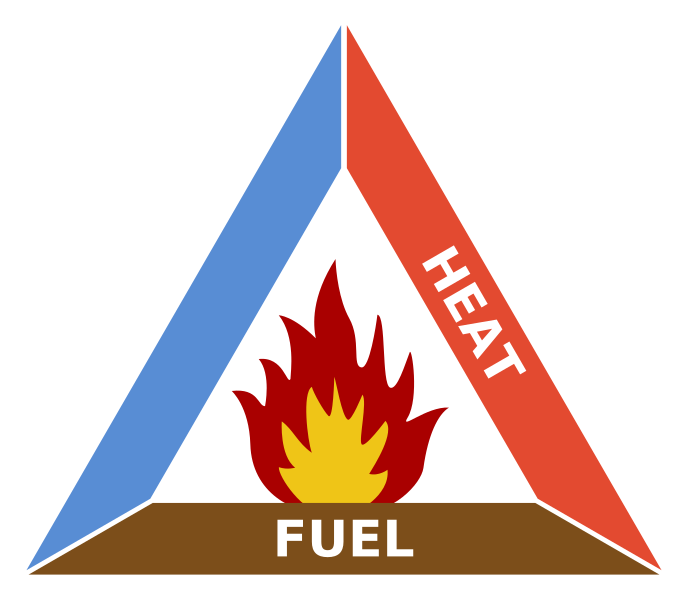
  • Background information on the science of fire and technological responses.
  • Analysis of how technology has changed in response to scientific evidence and innovation.
  • Comparison of two effective, but very different approaches to reducing bush / wildfire danger.
  • Argument and Reflective writing.
  • Extra Online Resources help stretch students’ understanding and interests.


QuickQuest – Dunning-Kruger: Learning, Expertise & Confidencewas $5.50, now FREE

DKE QuickQuest


Features of this QuickQuest

This is a slimmed down version of a real WebQuest. It still uses engaging real, rich and relevant Web resources (YouTube videos & links) and prompted activities to help students stretch their learning.

  • Introduction to the crazy “Dunning-Kruger Effect” where those who know little are confident in their expertise.
  • A shift to appreciate “Intellectual Humility”
  • Ending with an introduction and engagement with Flow Theory to enhance students’ own positive growth.

This “Learning to Learn” activity leads to and supports your use of models like:

  • Flow – Csíkszentmihályi
  • Growth Mindset – Carol Dweck
  • Habits of Mind – Costa & Kallick
  • Positive Psychology & PERMA – Seligman
  • Self-Awareness – CASEL


QuickQuest – Life Cycleswas $5.50, now FREE


Features of this QuickQuest

  • Background information on life cycles
  • Observational / interpretive exploration
  • Stretching to see Life Cycles as it relates to their own experience.


Black History and Experiences in the US

The Past IS Present – Black History WebQuest was $16.50, now FREE

The main purpose of this WebQuest is to engage students in real, rich and relevant learning that scaffolds their acquisition of new information into a deeper understanding, to construct meaning that is personally significant, to take their learning into real world action. I hope you and your students engage and enjoy!

Included in the full WebQuest:

  • Detailed Presentation Slides with
  • Engaging Video Introductions on
  • 6 Compelling Current Issues each with
  • Interactive Maps that connect the issue to your community.
  • Complete Scaffolding and Worksheets

Video Brainstorming on Black History Issues was $5.99, now FREE

The six short videos are a great stimulus to expose students to issues that carry on from US past history into present day life for Black American community.

The six issues are:

  • Redlining (long-term housing discrimination)
  • Racial Violence (lynching and hate groups)
  • Confederate Symbols
  • Gerrymandering (and voter suppression)
  • Economic Disadvantage
  • Mass Incarceration

Black History Past is Present: Jim Crow Laws Quiz 

This is a part of the full Past IS Present WebQuest. This is the “Background for Everyone” phase where all students learn basic information before exploring more complex topics. It is a simple knowledge acquisition activity where students are given 12 questions and one Internet site to get the answers. This Quiz includes the answer key.


Getting Poetry

Task Cards for First Reading of Any Poetrywas $3.90, now FREE


Use these Task Cards to:

  • Begin the study of poetry. These cards are meant to support a First Reading of any poet or poems.
  • Engage students in poetry without the hurdle of knowing poetic devices/ techniques / terms (this comes later! 😉
  • Quickly get to the core elements of poetry (Sounds, Imagery and Structure)
  • Encourage close reading and initial interpretations.
  • Allow use of any poem or collection of poems.
  • Help students ENJOY poetry!


Mastering Poetic Devices using Quizlet
Help student go beyond “knowing” poetry terms and really “Get” them!

Using 10 poems by Robert Frost and interactive Quizlet practice, students not only MASTER poetry terms, but also match them to examples taken directly from Frost’s work.

Use this activity if:

  • You want to study Robert Frost’s poetry
  • You already have (or can easily find) biography and background info on Frost
  • You want students to learn poetic devices / techniques / elements / terms
  • BUT you want student to really “Get” what the terms are and how they are used
  • BECAUSE you want students to really appreciate great poetry!


Task Cards for Reading 3 Robert Frost Poemswas $6.99, now FREE

Use these Task Cards to:

  • Begin the study of poetry. These cards support the analysis of 3 great Robert Frost poems:
    • Stopping by Woods on a Snowy Evening
    • The Road Not Taken
    • Birches
  • Engage students in poetry without the hurdle of knowing poetic devices/ techniques / terms (this comes later with an online quizzing activity)
  • Quickly get to the core elements of poetry (Sounds, Imagery and Structure)
  • Encourage close reading and initial interpretations.
  • Allow students to work in pairs, groups, individually or as a class. Answer cards are provided to increase students appreciation and competence!
  • Help students ENJOY poetry!


Thanksgiving

Giving Thanks in Divisive Times, 2019
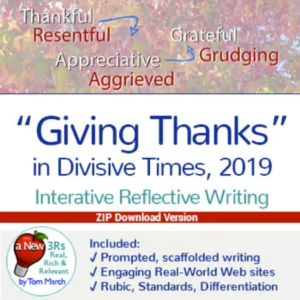
Take a new Real, Rich and Relevant twist on traditional Thanksgiving writing topics!

This scaffolded writing uses an interactive Web page to:

  • engage students with an authentic challenge,
  • explore “real world” Web sites, and
  • prompt students’ higher-order thinking, to
  • create a Reflective essay.

And includes:

  • Interactive offline Webpage
  • Teacher’s Guide and Tips for Differentiation
  • Presentation Slides
  • Assessment Rubric
  • Sample Text
  • Bonus Thanksgiving Hotlist

Who is Tom and Why is he chattering on about WebQuests?

Hi all,

As part of the Quick and Dirty WebQuest PL series on Youtube Playlist, I thought a few (a very few 😉 ) people might be interested in a bit of background about my role and perspective on developing WebQuests. So here’s a backgrounder video followed by links to the WebQuests and articles referred to in the video.

Please subscribe if you’re interested in WebQuests and let me know through the comments section what you’re interested in and I’ll address this aspects.


Links to WebQuests and Articles


New QuickQuest: Migration to Australia

We’ve All Come from Somewhere…

The story of mass migrations to Australia touches virtually every family on our island nation. As such, this is a great topic to engage students in the factors and stories that prompted migrations from the Gold Rush to the present (with options for the earliest Indigenous migration). History, Geography and Civics as well as students’ families personal experiences enrich the grand story.

This is a slimmed down version of a real WebQuest. It still uses engaging real, rich and relevant Web resources and prompted activities to help students stretch their learning.

Overview of the Migration QuickQuest

Features of this QuickQuest

  • Exploration of mass migrations.
  • Analysis of ‘Push’ and ‘Pull’ factors.
  • Discovery of how Australia’s policies stimulated and discouraged migration flows.
  • Question sheet for first-person interviews to learn more of their family history.
  • Activities for narrative and persuasive writing.
  • Develop keys concepts of ‘continuity and change’ and ’cause and effect.’
  • Extra Online Resources help stretch students’ understanding and interests.

DIY or TpT? – You Choose!

Because I want to support education, teachers and students (as I have since the first WebQuests in the 1990s), I provide a hotlist of the resources used in the activities. This way if you want to take the “Do It Yourself” approach, explore the links below and create your own activities.  If you’re happy to save time, use my approaches focused on “real, rich and relevant” learning, then use the QuickQuest is available through TeachersPayTeachers at minimal cost.

Hotlist of Resources

QuickQuest: Bushfires and Sci / Tech

Responding…

Few in Australia, or across the globe, were untouched by the bushfires that raged from November till February. So many communities were devastated by the catastrophic conditions. Our hearts and support went out to those who lost loved ones, homes and animals. Many prepared to evacuate and stayed up all night watching for ember storms. Week-after-week, month-after-month, the tragedy continued.

Now, with the beginning of the Royal Commission hearings into the “Black Summer Bushfires,” it’s a good time to offer an educational response.  Thanks go to a year 5/6 teacher in Victoria who suggested this topic as a way to explore “science as a human endeavour.”  (Note: if you would like to similarly suggest a topic, please use the form. I’m keen to respond to what people need.)

Overview of the Bushfire QuickQuest

Education is one good way for people to process and understand catastrophic and traumatic events.  This is especially true of children and young adults. Also, sometimes knowing information or solutions is a comfort and highlights strategies for the future that contribute to a sense of personal power. Moving towards these ends is the goal of this QuickQuest on Bushfires and Technology. Below is a short video introduction of the QuickQuest.

DIY or TpT

As I’ve come to do, because I want to support education, teachers and students (as I have since the first WebQuests in the 1990s), but I’m also developing curriculum as part of my consultancy, to further both of these goals, with each QuickQuest I provide a hotlist of the resources used in the activities. This way if you want to take the Do It Yourself” approach, explore the links below and create your own activities.  If you’re happy to save time, use my approaches focused on “real, rich and relevant” learning, then the QuickQuest is available through TeachersPayTeachers at minimal cost.

Wikimedia Commons – Gustavb / CC BY-SA

Hotlist of Resources

Credits: 

Thanks

I’m always interested in hearing back from people, whether that’s through comments on this post, via Twitter (@NextEraEd) or privately using the contact form.  Let’s not get overwhelmed with outcomes, standards and subject content to the point where we neglect helping students learn to learn and reflect on their cognitive development and joy in learning!

Dunning-Kruger Effect QuickQuest

DKE QuickQuest

Intro to the latest QuickQuest

The Dunning-Kruger Effect is that crazy finding that people who think they are the best at something (VERY confident) are often the least knowledgeable, skilled and competent. Yikes! Of course this makes sense: how can you know your deficiencies when you know little about what goes into a topic or task?

This perplexing “Huh?” kind of cognitive experience makes the Dunning-Kruger Effect a great tool to engage students and prompt them to reflect on their own cognitive biases and to promote the kind of intellectual humility that can lead to real growth and expertise.

How you can use this to Engage Your Students?

I’ve decided to try this approach. I want all teachers and their students to benefit from engaging in this topic and to benefit from the terrific resources people have put online. Also, I reckon it’s not a bad idea to get paid for a few days work 😉 . So here’s the approach. Below you will find a hotlist of all the resources used in the QuickQuest.  You can sift through the list, find things you like and then create the learning activities around them. Go creativity!

The other option is to use the slides and activities I’ve already created using all the links from the hotlist. You can find this on my TeachersPayTeachers Store.  Here’s a short overview video that highlights how you and students can get started immediately if you want to download my QuickQuest.

Here’s the Video Overview of the QuickQuest

Here’s the Hotlist of Links

Thanks

I’m always interested in hearing back from people, whether that’s through comments on this post, via Twitter (@NextEraEd) or privately using the contact form.  Let’s not get overwhelmed with outcomes, standards and subject content to the point where we neglect helping students learn to learn and reflect on their cognitive development and joy in learning!


Life Cycles QuickQuest (and Invitation!)

QuickQuest #1 – Life Cycles

QuickQuest Mini WebQuests on Life Cycles

As briefly described in an earlier post, QuickQuests are a slimmed down version of WebQuests. This makes the easier to make and use (whether in a classroom or remotely).

What Makes this a QuickQuest, not a WebQuest?

Like WebQuests, the main idea behind a QuickQuest is using rich online resources to engage students in an activity that prompts them to acquire knowledge, think more deeply about the topic and then find personal meaning. The main differences are that a QuickQuest can be completed in 1-3 lessons and done by individual students.  All of these processes are achieved in what’s essentially an enhanced “worksheet”  using Google Docs (and Slides for the teacher). You can get the Life Cycles QuickQuest for free from my TeachersPayTeachers store.

Here’s a peek into the Life Cycles QuickQuest

I invite you to Suggest a Topic!

I’m really happy to create more QuickQuests so why don’t you send me your topic requests! Click this link or the graphic below to fill in a short form that shares your suggestion.

Or use the Form above, comments below, my contact page or Twitter (@NextEraEd) to suggest a topic.


Why WebQuests, An Intro (2020)

What was Old is New Again…

This post is to support online learning about Why and When to use WebQuests. If you think the name WebQuest is too 20th Century, just substitute “Real, Rich and Relevant Problem-based online learning that prompts student understanding and empowers teachers through a scaffolded approach.” Yeah, so that’s why I keep opting for WebQuests….

So as old hat as WebQuests might be for some, new and early career teachers are always, thankfully, joining the profession.  So this post (using the slides below and video conferencing) will start at the beginning, but use activities and thinking prompts instead of texts. You can read the articles elsewhere and they are included of some of the activities.

Yeah, so “Why?”

A great question. WebQuests were created at the dawn of the World Wide Web. Using the Web as a place for learning presented a challenge:

Given the uniqueness of WWW, how does learning need to be structured to ensure success?

A couple other wrinkles came into play:

The Web is a pretty chaotic place to learn, VERY different than textbooks and worksheets. How can we help students become successful learners in such an “ill-structured domain?” The slides go through other elements of the Web.


Please use the comments section below (or contact me) with questions or if you want a similar session with your teachers.

So what about “When?”

When something is a good idea, people are tempted to think it’s always a good idea. WebQuests, as designed, are solutions to the ill-structured aspects of the Web and a great way to promote students’ critical & creative thinking and personal meaning making.  Thus, great for exploring “Big Ideas,” concepts or complex relationships. But not necessary when simple acquisition of information is the goal.  Think definitions for parts of speech or the “Times Table” to 10.

Links to Tom’s Work

References

New Slimmed Down WebQuest

Time for Re-invention?

As #RemoteLearning #DistanceLearning and #COVIDEdu dominate education these days, I’ve been posting videos on WebQuests as a way to help.  I will continue to do this. Happily, people have been getting in touch to share ideas and needs.  Two main responses come up:

  1. WebQuests? We did those years ago. How about something new?
  2. WebQuests were great. Why aren’t people using them today?

Both responses are understandable. As pedagogically sound as the WebQuest format is, like just about all new ideas, especially in education, what was seen as “paradigm shifts” often become mere “pendulum swings.” We thought we were changing the world from rote learning to deep understanding. But in the bustle of school life, routines can overwhelm any new way of doing things.

The Downsides of WebQuests

That said, I’ve created enough WebQuests and led that many more PL workshops to know that a few things make WebQuests pretty challenging:

  • They take time to create – mostly in two ways: finding rich online resources and designing the group process.
  • Understanding “understanding” – everybody “gets” knowledge. It’s the acquisition of new information. But folks aren’t typically so clear on how understanding requires the use of knowledge. And this “construction of new meaning” goes right to the heart of Piaget’s assimilation and accommodation. We all learned this in Teacher Ed, but it took me a pretty long time to really get it.
  • The class time they take – When you have students check their background knowledge, then divide in teams to take on specific roles, and in these roles, to develop particular mastery before bringing this expertise back to their groups, at which time a jigsaw synthesis must occur, then….  you get the idea. This is why I’ve always see WebQuests as a central, once / semester kind of experience, not daily fare.

But we are in a world where many students are learning remotely, accessing online information. We want them to enjoy Real, Rich and Relevant learning, not copy/paste their way to completion.  So I feel that something – call it whatever – that engages students in this way and prompts them to deeper thinking, while not taking too much time for either teacher prep or delivery – is a good thing.

Enter the … “QuickQuest?”

I really love that the Web is full of great learning resources.  I find them inspiring. People, non-profits, cultural groups, media companies, you name them, put out really amazing content.  We educators are so lucky to be teaching in this era of rich resources (and good bandwidth?). So here’s my approach:

    1. I start with a topic worthy of students (this can be from the gut or curriculum standards)
    2. I take about 30 minutes to search around the Web to see if any Real, Rich and Relevant resources exist for the topic.
    3. If so, I know I’m onto something good and I keep at it.  This usually means a little lateral searching to find things that might extend or deepen how students engage with the topic.
    4. If I’m not finding anything inspiring in 30 minutes, but feel like I’m close, I do more searching. If I feel like the topic’s a dead-end, I’ll call it quits and go with the usual fare.

So let’s see how this works in real life:

I was contacted by a teacher looking for a WebQuest on “Life Cycles” for Years 3-4 science students. I took a look through a database I have of “BestWebQuests,” but didn’t turn up anything. I’d been playing with this mini WebQuest / QuickQuest / PDQ Quest (yes, “pretty darn quick,” but also “pedagogically-driven query”) idea and took the “Life Cycles” request as a challenge.

The result is what I’m tentatively calling a QuickQuest. It’s supported by slides and a student activity page.  You can get the Life Cycles example for free from my TeachersPayTeachers store.

Let’s Hear from You!

Please use the poll, comments below, my contact page or Twitter (@NextEraEd) to

  1. Give feedback about the name
  2. Suggest topics and I’ll see about making “QuickQuests” on them!


Tips for WebQuest Designers

Here’s one for You!

Whether you are studying education to become a teacher, are already in the classroom or are one of those leaders among teachers, if you’re interested in supporting students’ deeper understanding and construction of meaning, here a some tips for you!

This is an overview of all the sections, pointing to the tips page.  Look for the pots and videos focused on each of the sections with examples from published WebQuests.


Links and Resources

Tips for WebQuest Designers – suggestions for each section of the WebQuest template.

David Jonassen – one of my heroes in the field of educational technology and constructivism.


Black History WebQuest: The Past IS Present

Welcome to the Video Tour

An earlier post on the Past IS Present Black History WebQuest gave an overview of the elements and design process I used. The video below is a deep dive so you can take a closer look. You might want to use it with students or be inspired to create something of your own.

What really makes this WebQuest exciting for me are the great short videos available on all six compelling topics and then also really great interactive maps so that students can locate the issue in their own neighborhood, city or state.

The topics are:

  • Redlining
  • Racial Violence
  • Confederate Symbols
  • Gerrymandering
  • Economic Disadvantage
  • Mass Incarceration

The actual Past IS Present WebQuest is available from my TpT store. This is the first out of the many WebQuests I’ve made that I’ve opted to charge for. Let’s see how it goes. I’m happy to get feedback through the comments below or via the contact page on this Website.