
What’s the difference?
Use the table below to compare how things used to be done on the World Wide Web and the newer Web 2.0 version.
| Web 1.0 | Web 2.0 | |
|---|---|---|
| Photo Gallery | » | Flickr or Tag Galaxy |
| WebMuseum | » | The Tate or Jackson Pollock.org |
| HyperHistory | » | Dipity or Timelines |
| Britannica Online | » | Wikipedia |
| personal webpages | » | Blogging, Twitter & Facebook |
| Bloglines RSS Feeds (web 1.5) | » | Pageflakes (ICT or IWB) |
| Graphic Organizers | » | Exploratree |
| Yahoo | » | tagging (Google News) orTagCloud |
| MapQuest | » | Google Maps (Streetview) |
Critical Attributes of Web 2?
Use Stixy to share 3 – 5 characteristics that make Web 2 different from Web 1.
Defining Terms
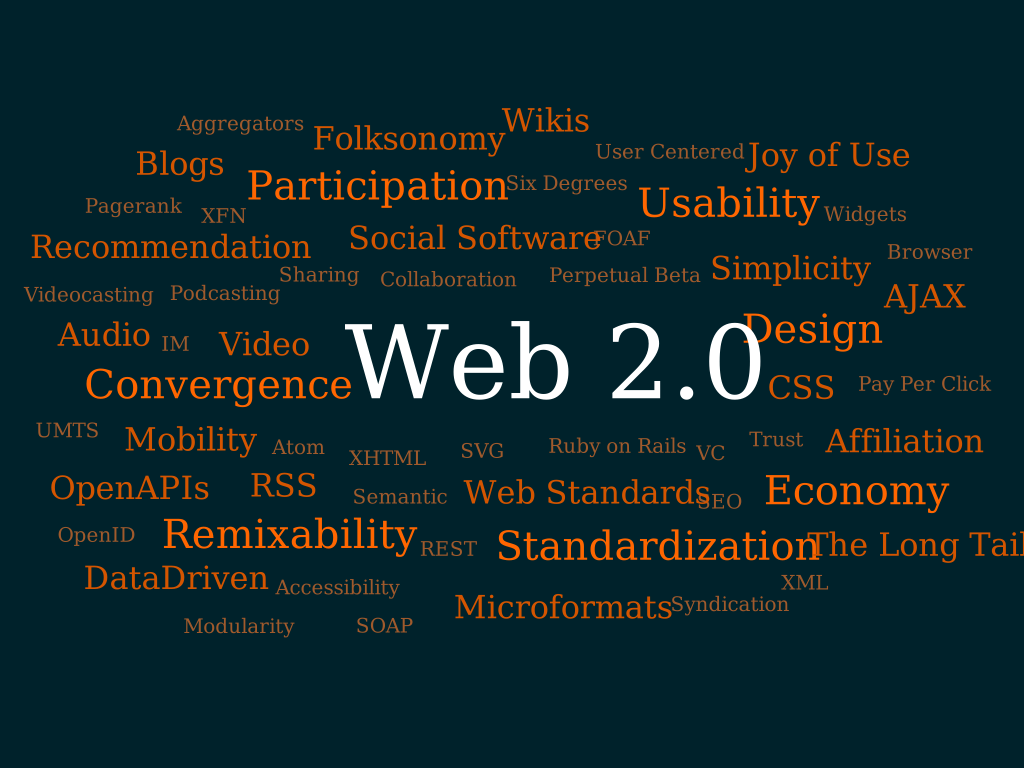
If some of the jargon is confusing, try this handy interactive graphic to access a Wikipedia definition of some terms you may have heard, but don’t understand.
1 thought on “Charting Web 2.0”